Over 80 students from across Adelaide University design, build and race an electric formula-style car every year, competing in Formula SAE, the world's largest student engineering design competition.
What is Formula SAE?
Formula SAE (FSAE) is an international competition where university students engineer, design and build a prototype formula style race car ready for mass production. Started in 1981 by the Society of Automotive Engineers, the competition gives students an opportunity to put their studies into practice by working on a complex and moderate-scale project.
Formula SAE allows students to compete all over the world, with events held in the USA, Spain, Germany, the UK, Japan, Italy, Brazil, Austria, Australia, Hungary, India and the Czech Republic. With a heavy focus on innovation, the competition involves internal combustion, electric, and a newly formed autonomous vehicle category.
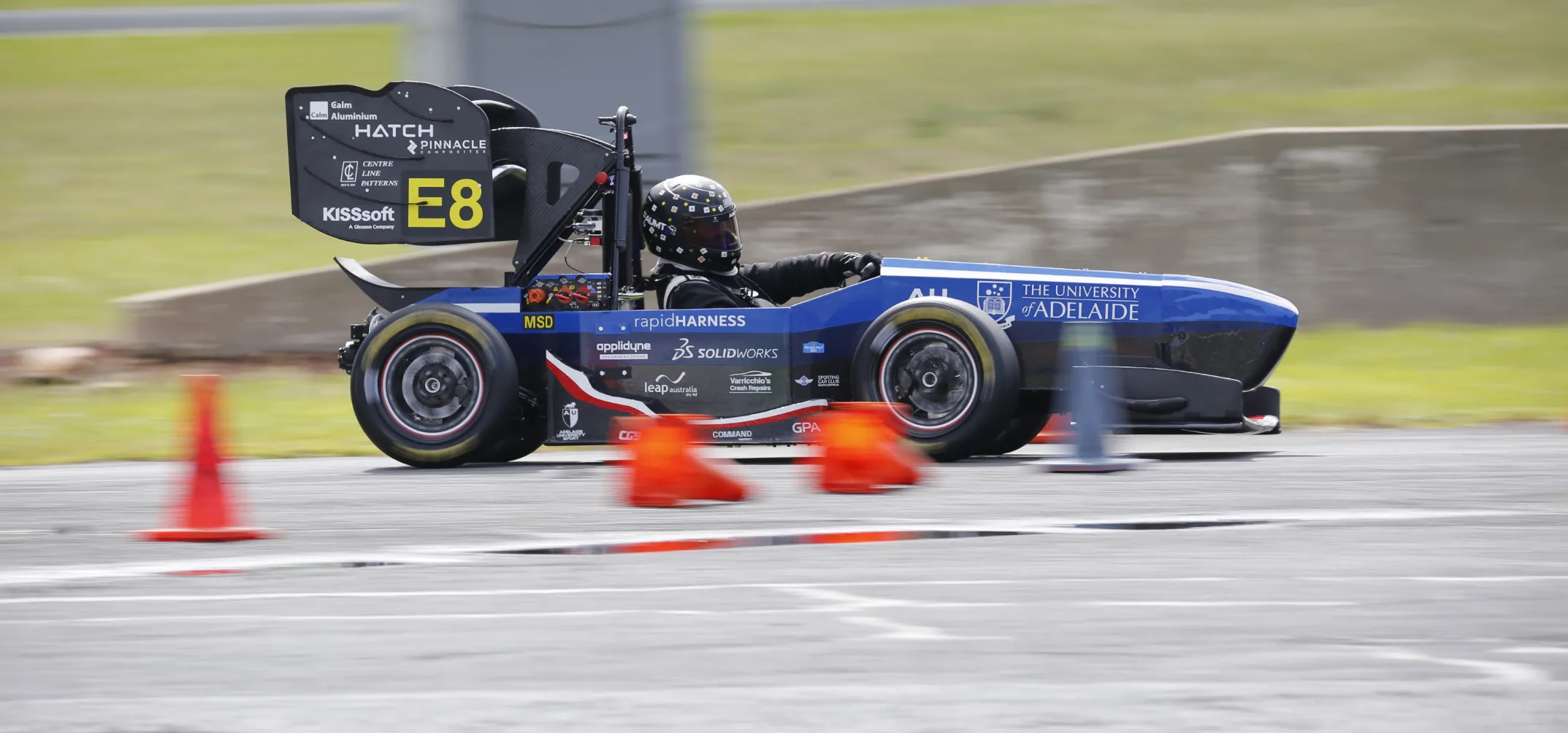
Formula SAE comes to The Bend
The annual Formula SAE Australasia (FSAE-A) competition is held at the start of December and, for the first time, takes place at The Bend in South Australia. The track hosts over 30 teams from around the world, competing in static events that showcase the design and business side of the car, and dynamic events where the physical performance of the car is tested over a variety of tracks and scenarios.
The FSAE-A competition
Static events
Static events are about justifying the viability and operation of the team, were the car to be mass produced and sold to an amateur competitive market. The events test real world industry skills that are the cornerstone of engineering.
Business
The team is assessed on their ability to develop and deliver a business case to convince executives the design best meets the demands of the amateur weekend competition market while being profitably manufactured and marketed.
Cost
Assuming a serial production of the prototype, teams justify their cost report and calculations to a jury, enabling members to familiarise themselves with the manufacturing processes of some of their car's components.
Design
The team is given an opportunity to explain and validate the engineering process which underpins the design of the car, and demonstrate how the car meets specific design goals to a panel of industry professionals.
Dynamic events
Dynamic events are the culmination of the engineering behind the team's car. Split between four events, the dynamic events test every aspect of the car's speed, manoeuvrability and reliability.
Acceleration
The car competes in a 75 m standing drag race, testing the acceleration of the vehicle.
Skidpad
Navigating a figure-eight style track, driving each loop twice, this event tests the turning performance of the car.
Autocross
This slalom style circuit tests all elements of car performance, including acceleration, braking and cornering.
Endurance
A 22 km long endurance autocross event. Performance is strongly reliant on the car's energy efficiency and reliability.
“Applicants who have been in Formula Student are heads and shoulders above applicants who have not.”
James AllisonChief Technical Officer, Mercedes-AMG Petronas F1
“FSAE bridges the gap between theory learned at university and practice. You develop teamwork, prepare, design and make it. This brings discipline to your work.”
Ross Brawn OBEManaging & Technical Director, Formula One Group
Two teams.
One AUMT.
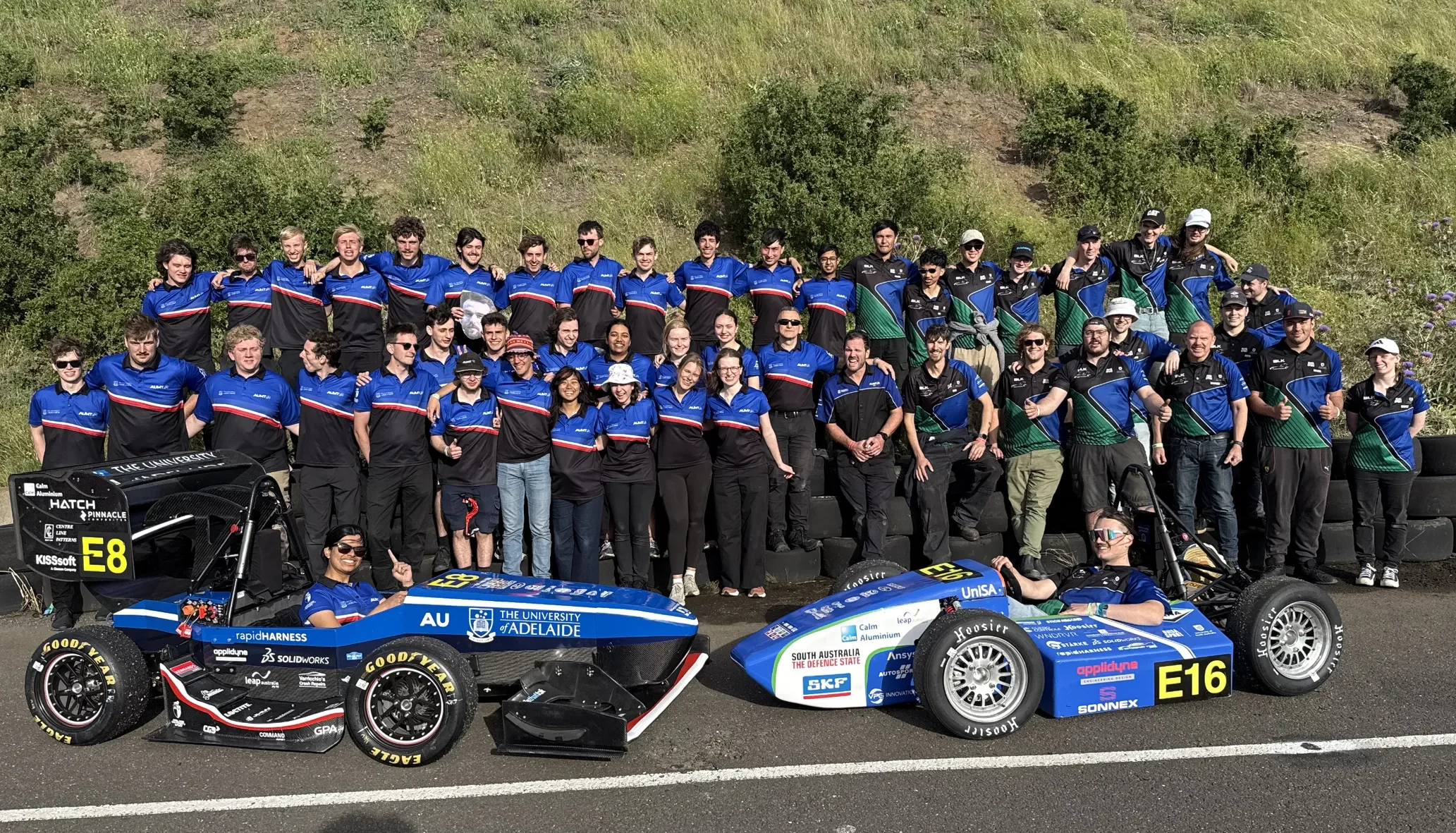
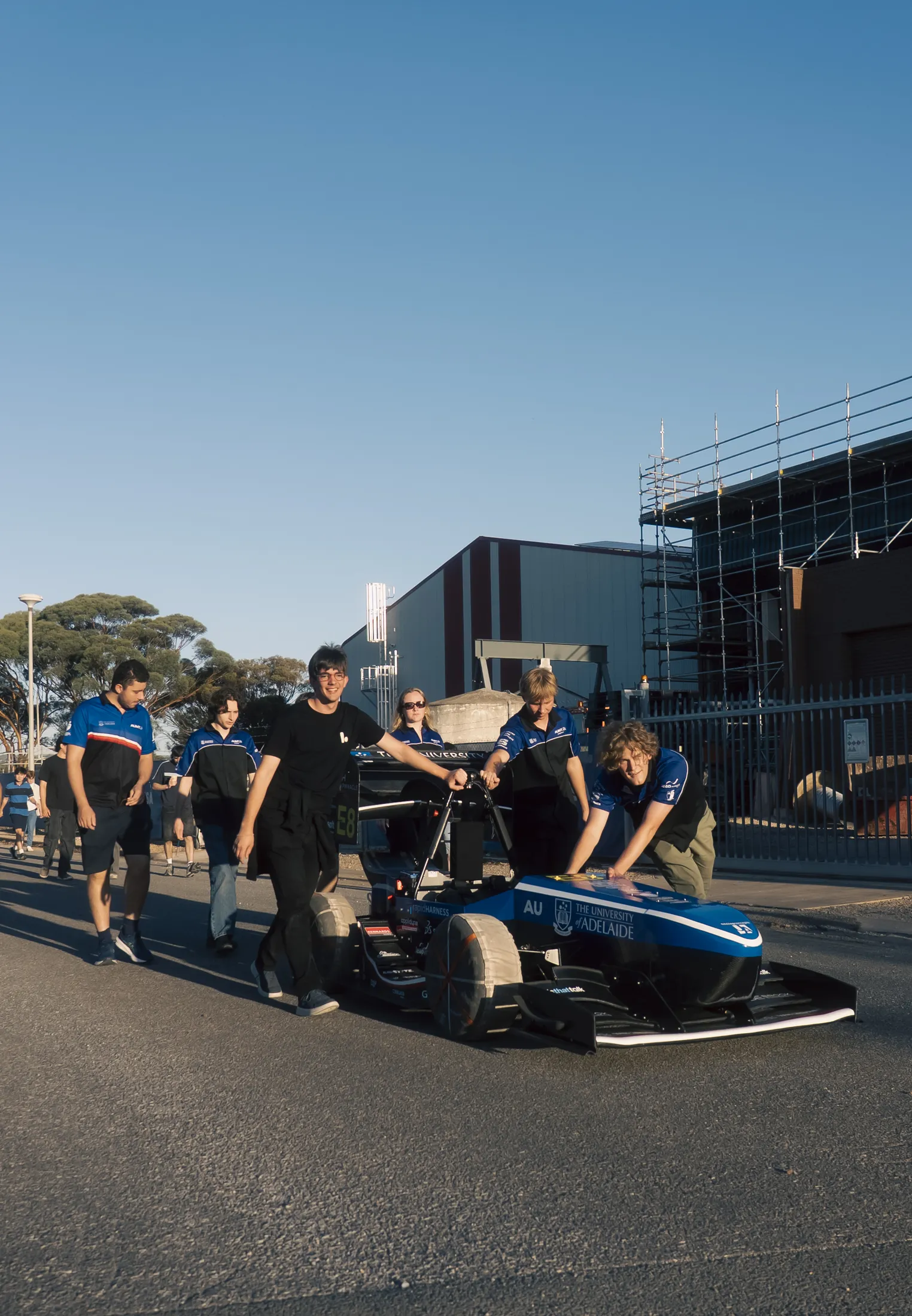
Following the amalgamation of the University of South Australia and The University of Adelaide's motorsport programs, AUMT now operates as a single, cohesive team, bringing together the capability and experience of two previously established Formula SAE teams.
On and off the track
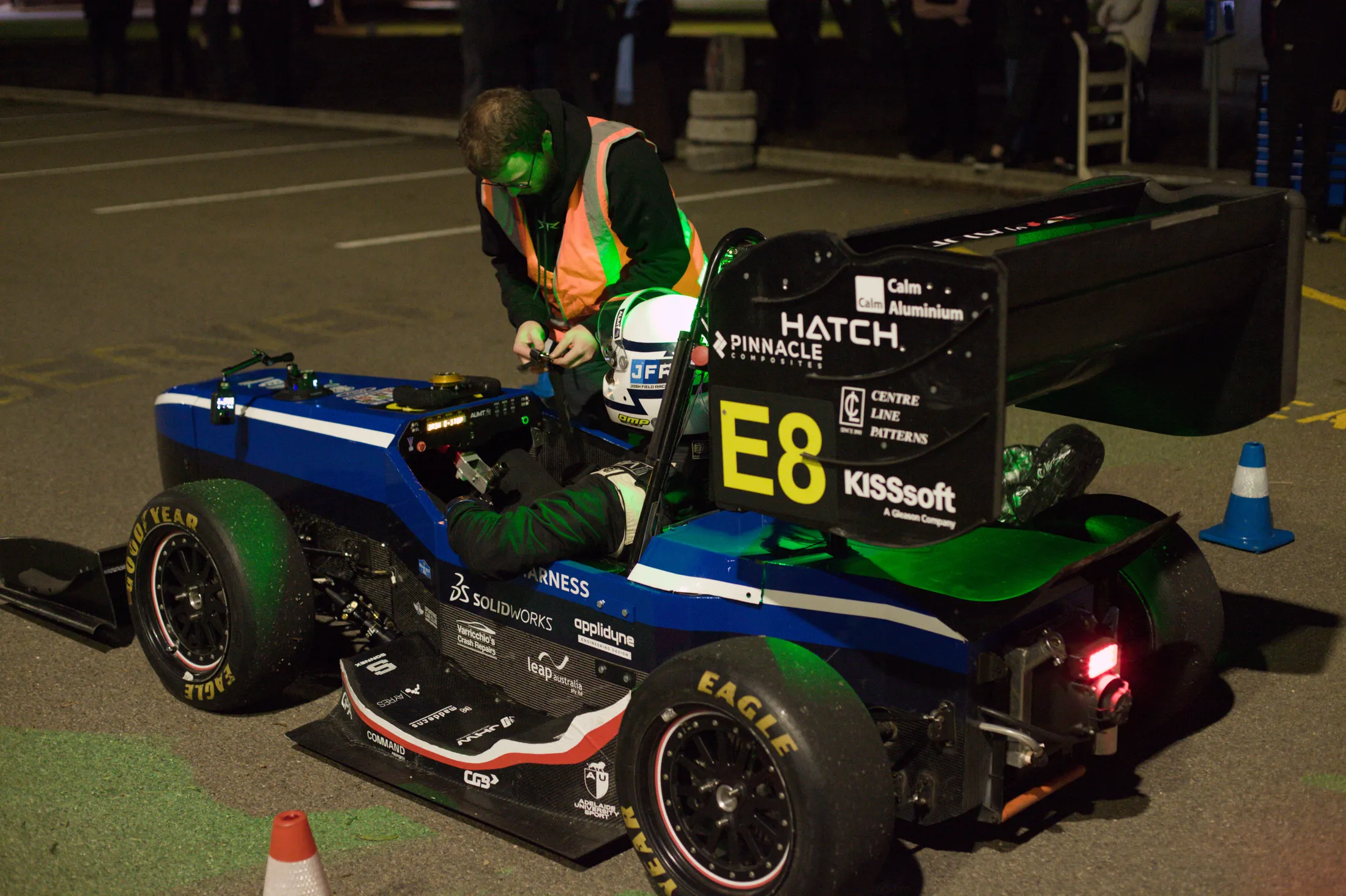
Twenty-five years of AUMT and UniSA cars, now one team building ADL26e.
Updates
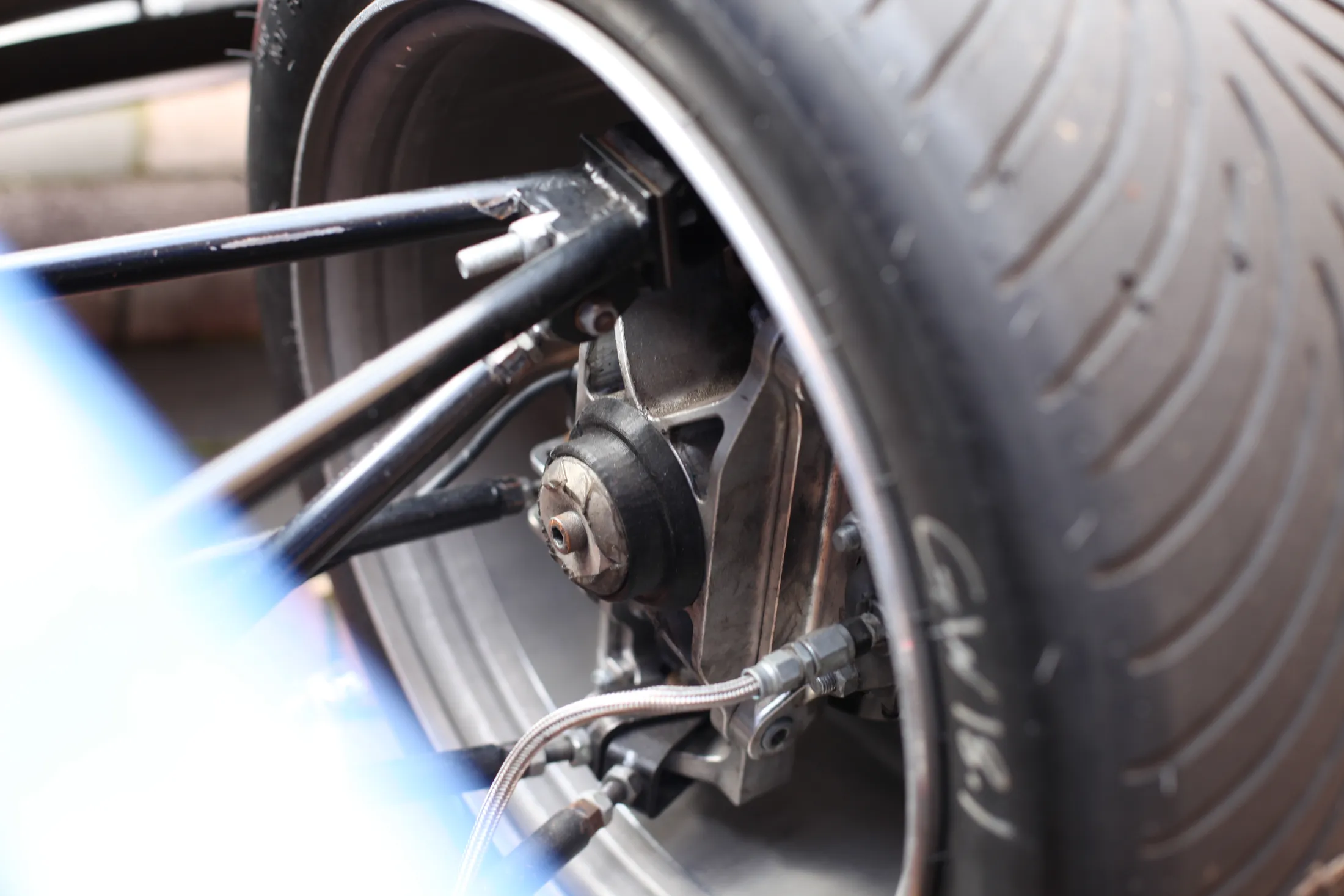
Hub motors and a planetary gearbox: the 2026 powertrain
The primary engineering objective for 2026 is the move to a hub-motor powertrain, starting with the design of a planetary gearbox.
Read more →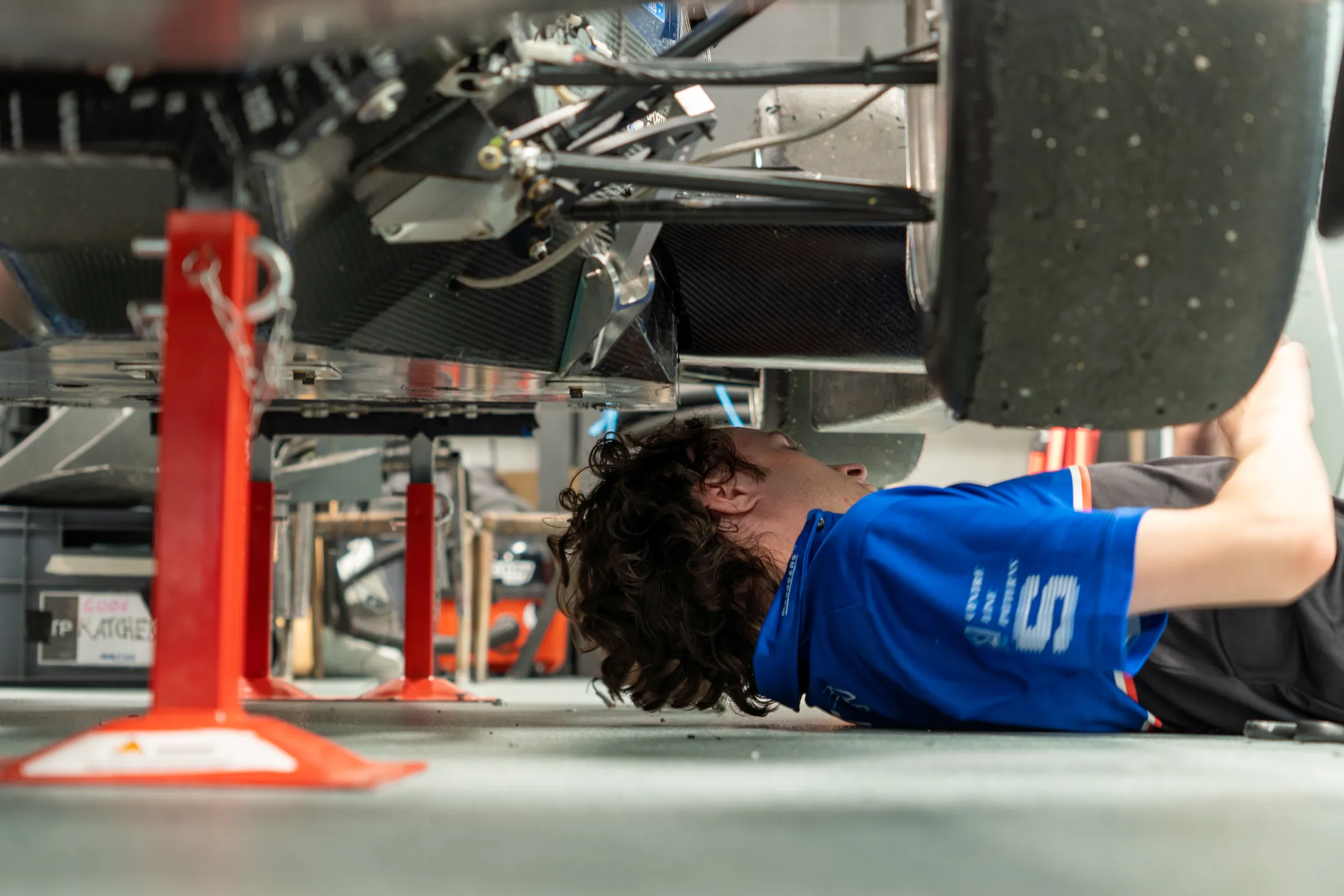
Building our first carbon fibre monocoque
Carbon fibre and aluminium honeycomb replace 24 years of steel spaceframe. How we tested, built and fitted out ADL25e's chassis.
Read more →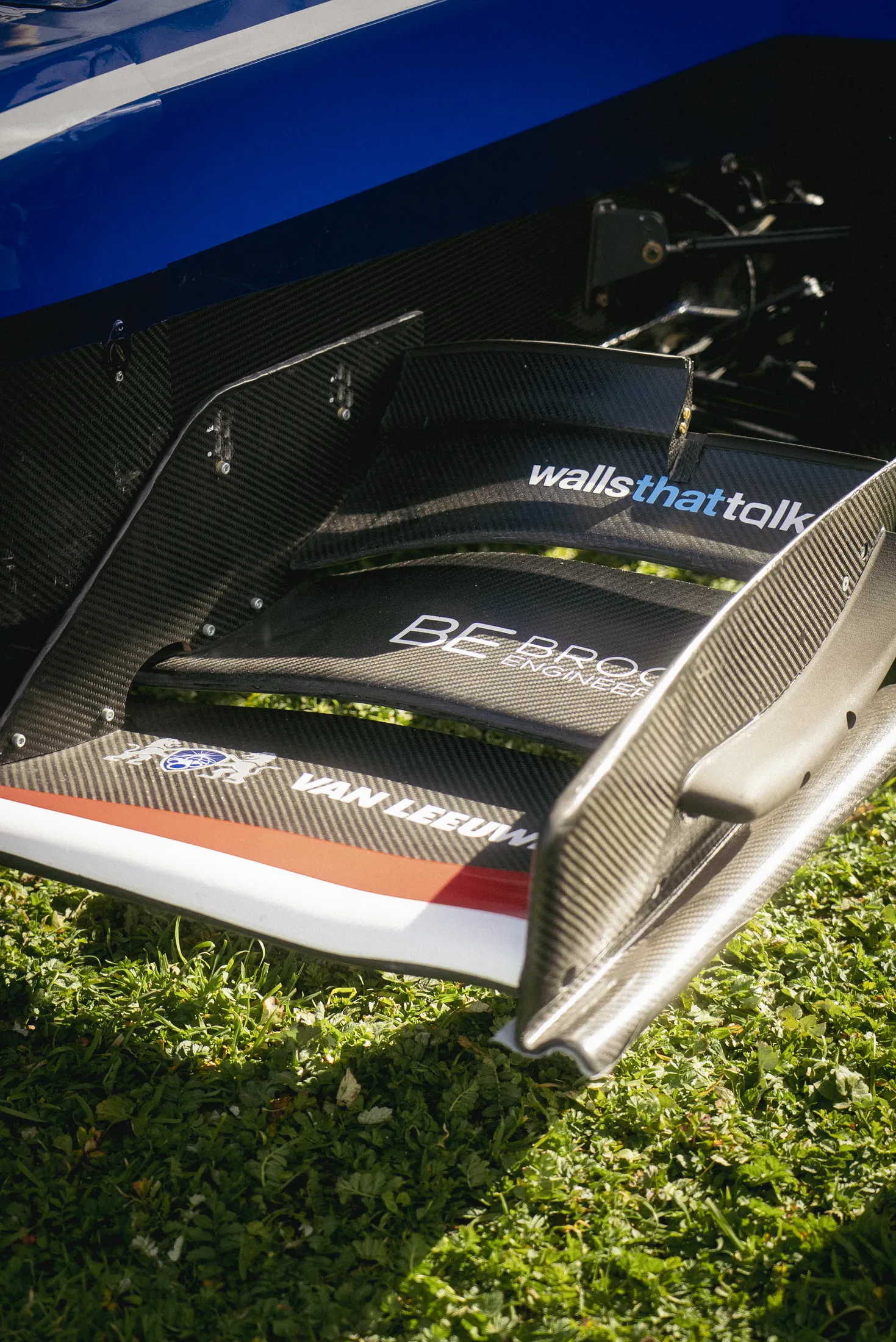
Aero package: from CFD to carbon
Siemens NX surfacing, a leaner CFD workflow, cornering simulations and a nosecone mould CNC-cut by Centre Line Patterns.
Read more →